

The Department of Biotechnology has long been defined by our close, caring, and collaborative community. Whether you graduated a few months or many years ago, we hope you’ll stay connected with faculty, current students, and your fellow alums.
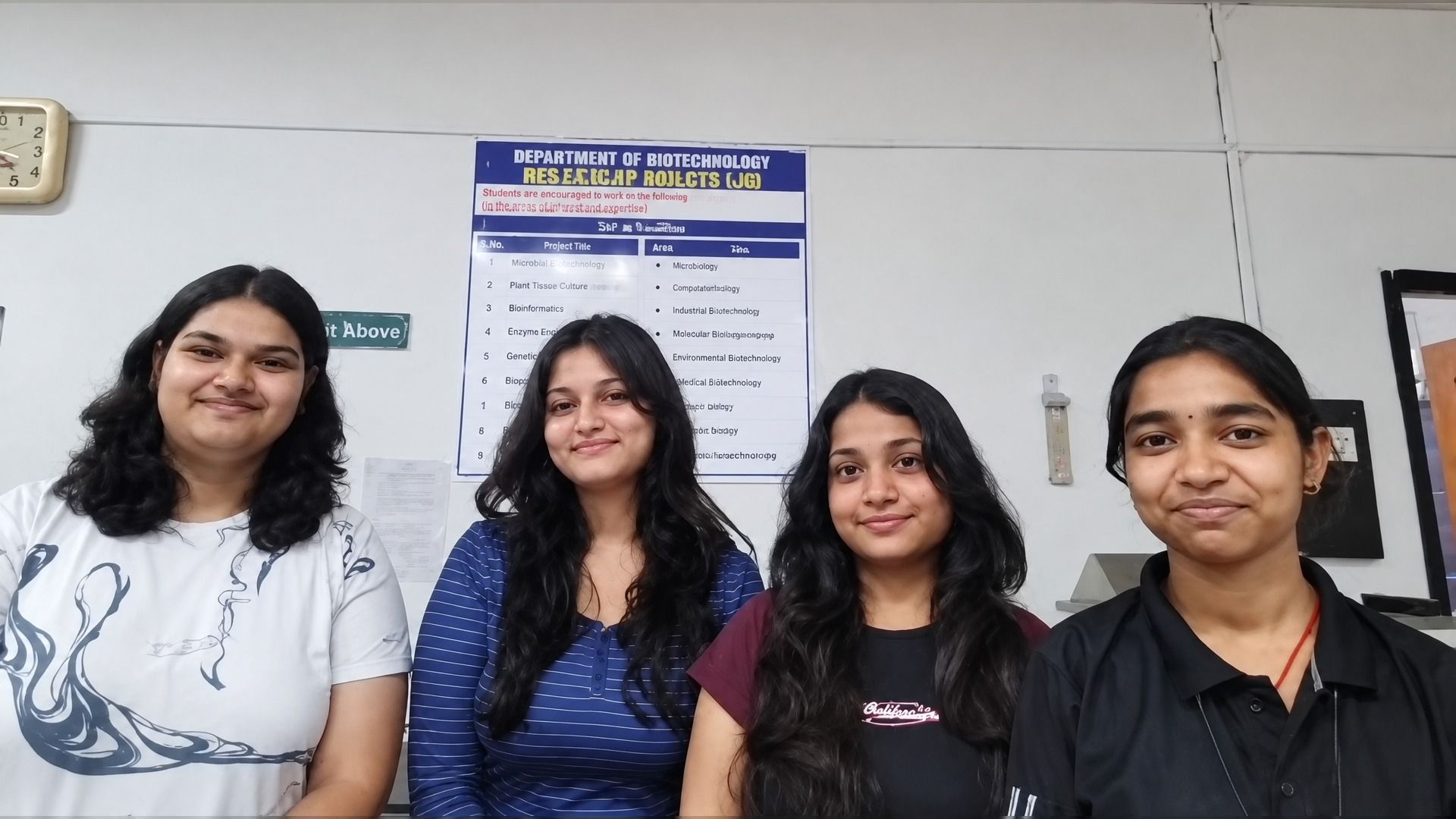
Single-nucleotide polymorphisms were identified and genotyped in blood samples from lung cancer and COPD cases and controls, and tested statistically for association with disease risk.
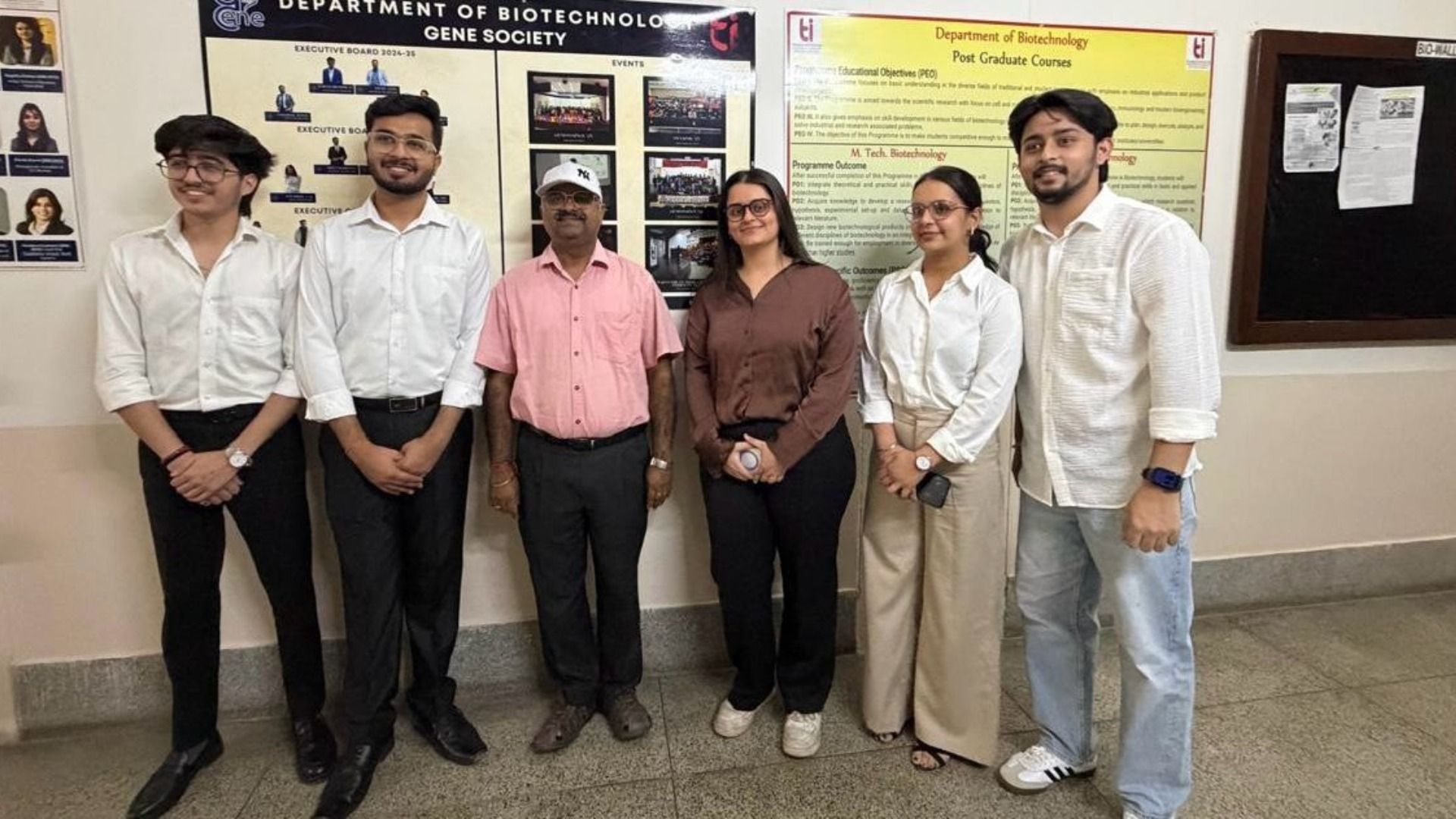
A working prototype that reads blood glucose without a finger prick, using near-infrared spectroscopy, built from circuit design through to a tested device.
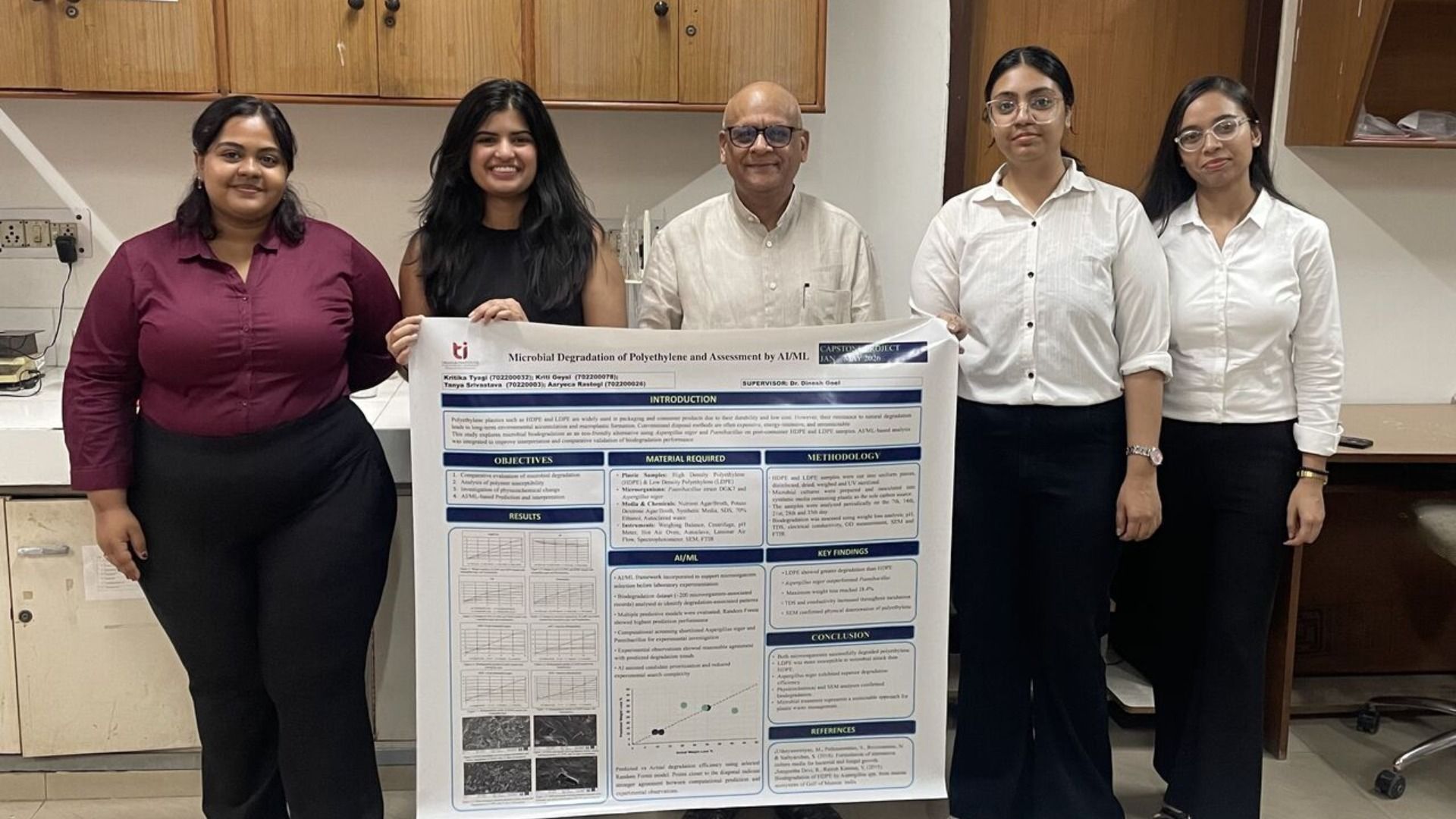
Wet-lab works on microbial breakdown of HDPE and LDPE paired with a machine learning pipeline that ranks candidate organisms before bench testing, with an interactive dashboard for the results.
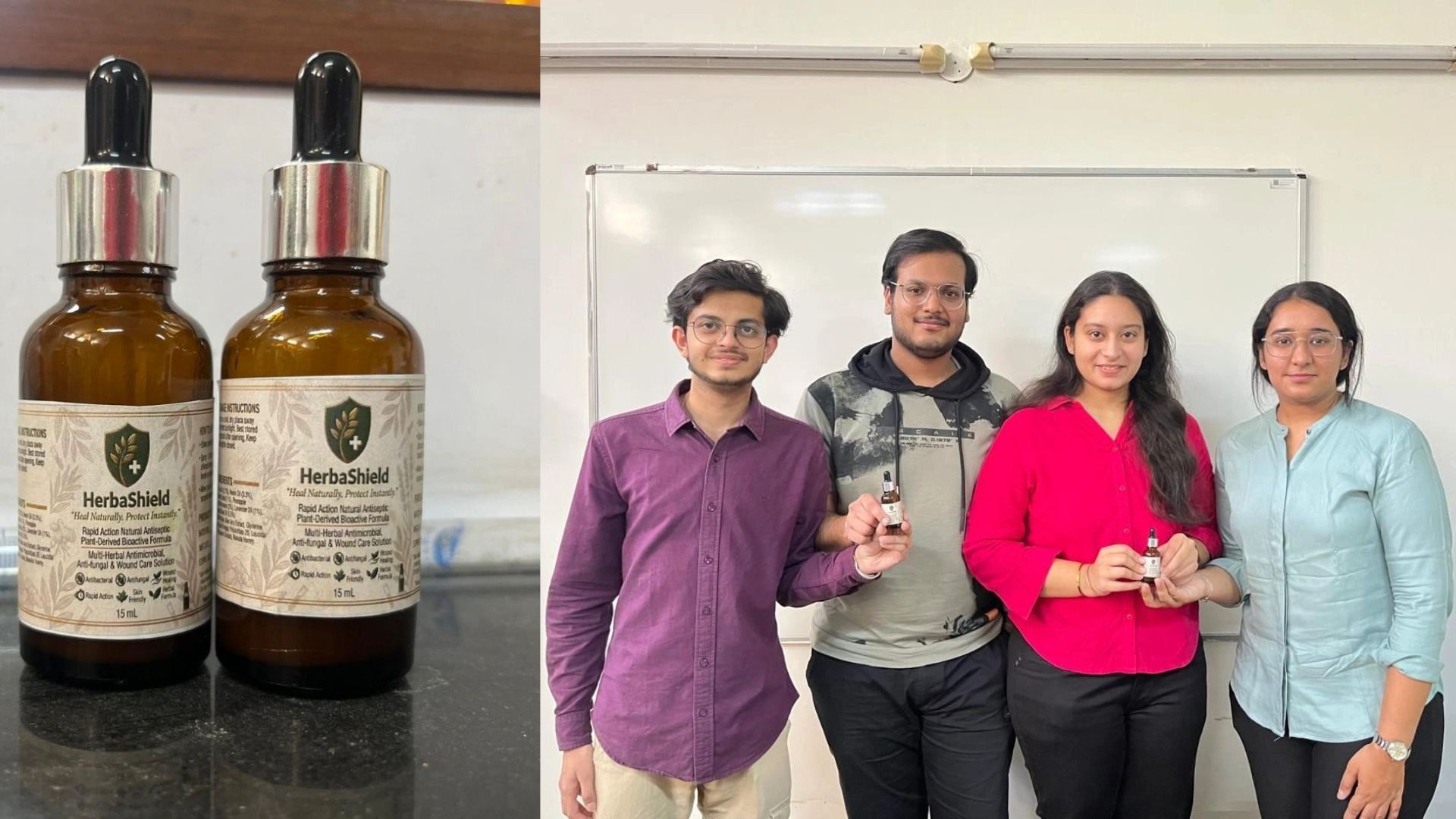
A plant-derived antiseptic formulation with antibacterial, antifungal and wound-healing activity, taken from formulation development through antimicrobial testing to a prototype.
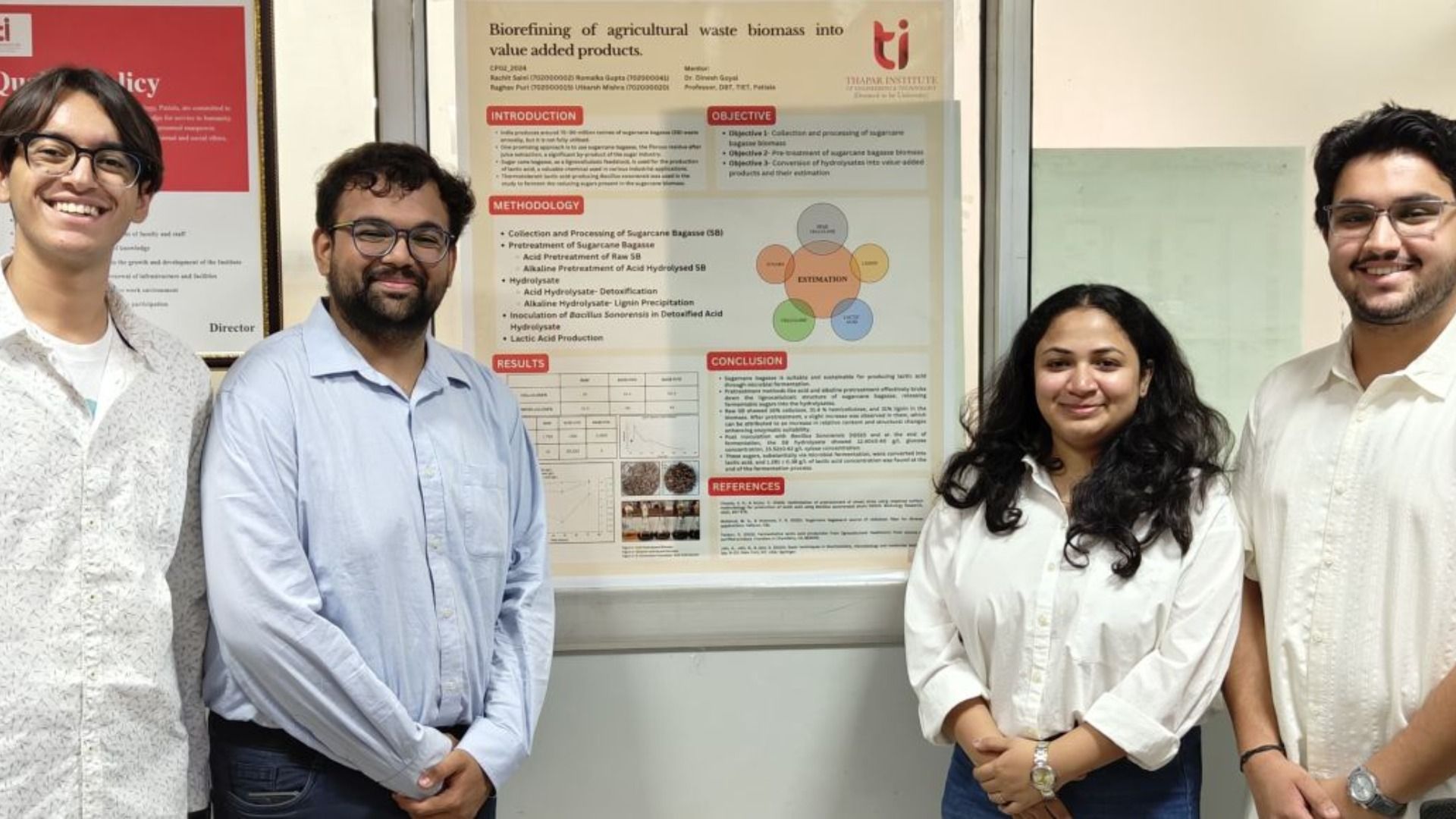
Lactic acid produced from sugarcane bagasse using the thermotolerant bacterium Bacillus sonorensis, turning an agricultural residue into a commodity chemical.
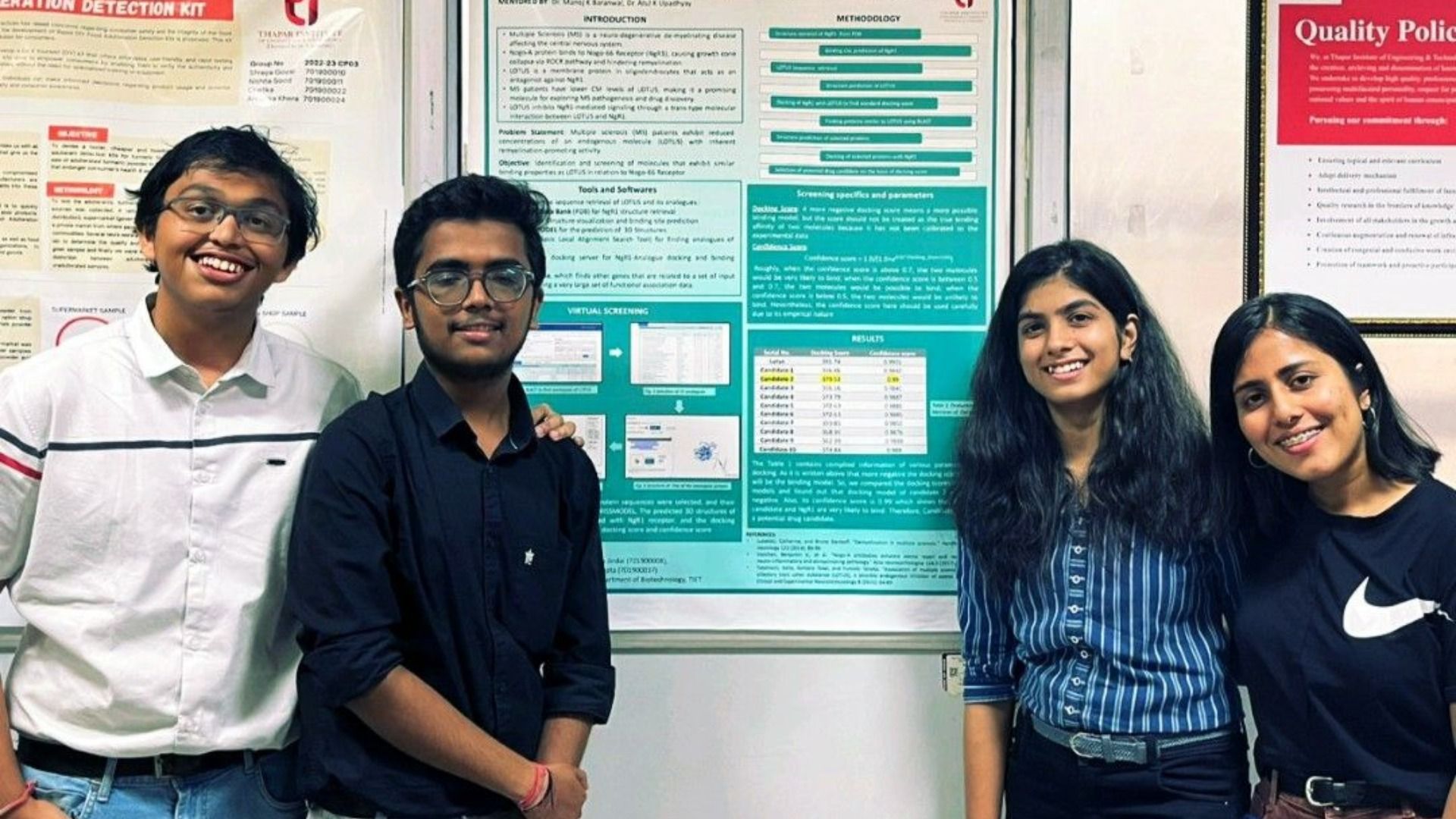
Molecules were designed and screened computationally to block the Nogo receptor the way the natural inhibitor LOTUS does, a pathway that is depleted in multiple sclerosis.
At Thapar, learning is not limited to what happens inside the classroom. Students are encouraged to take concepts into real situations through projects, research, internships, industry engagement, field experiences, and student-led initiatives. These experiences help students test ideas, work through problems, collaborate with others, and understand how knowledge translates into practice.
Whether working on a project, exploring a research question, engaging with industry, or building something of their own, students learn to approach challenges with curiosity and purpose. The emphasis is on learning through doing: applying what they know, learning from what does not work, and developing the ability to turn ideas into meaningful outcomes.
Thapar Institute of Engineering & Technology combines experience with new-age implementation.
P.O. Box 32, Bhadson Road, Patiala, Punjab, Pin -147004, India
Toll-free Number : 18002024100
Timings: 9 AM to 6 PM, Monday to Saturday
admission@thapar.edu