MY TIET

Department of
Biotechnology

Major
Research
Areas

Main Image
  • Cancer biology & therapeutics
  • Natural products & drug discovery
  • Bioinformatics & computational biology
  • Peptide Vaccine
  • Nanobiotechnology
  • Industrial & environmental biotech
  • Bioprocess engineering
  • Agricultural biotechnology
  • Plant-microbe interactions
  • Gut microbiota & metabolic disease
  • Biomaterials
  • Genetic and Epigenetic Gene Regulation
  • Pharmaceutical sciences
  • Plant Biotechnology and Crop Improvement
  • Microbial Biotechnology and Bioprospecting
  • Environmental Biotechnology and Circular Bioeconomy
  • Food Biotechnology, Nutrition and Food Security
  • Biomedical Biotechnology and Human Health
  • Protein Science, Enzyme Technology and Structural Biology
  • Biosensors and Biomaterials
  • Computational Biology, Genomics and Data-Driven Biotechnology
Main Image

Biotechnology Research at Thapar University

Since its establishment, the Department of Biotechnology at Thapar Institute of Engineering & Technology has been advancing education, research, and innovation at the intersection of biology, engineering, and computational sciences. Research in the department spans across plant biotechnology and crop improvement, microbial biotechnology, and environmental biotechnology within a circular bioeconomy framework - which is tied closely to food security, sustainability, and climate resilience. The department has grown into a multidisciplinary academic environment offering B.Tech., M.Sc., M.Tech., and Ph.D. programmes focused on solving contemporary challenges in life sciences and biotechnology. Alongside this, faculty work in food biotechnology and nutrition, biomedical biotechnology and human health, and protein science and enzyme technology, along with nanobiotechnology, biosensors, and biomaterials aimed at real diagnostic and industrial applications These areas reflect a strong emphasis on both fundamental biological understanding and applied technological development. The academic environment fosters scientific inquiry and encourages students to engage with research that addresses real-world biological and biomedical challenges. A growing share of this research also involves computational biology, genomics, and the use of artificial intelligence and machine learning, the very tools that now support work across nearly every research area in the department, from crop genetics to disease biology.
Explore our Sponsored Research

Explore the Supporting ideas that have the potential to make a difference

Collaborative Research and Lab Environment

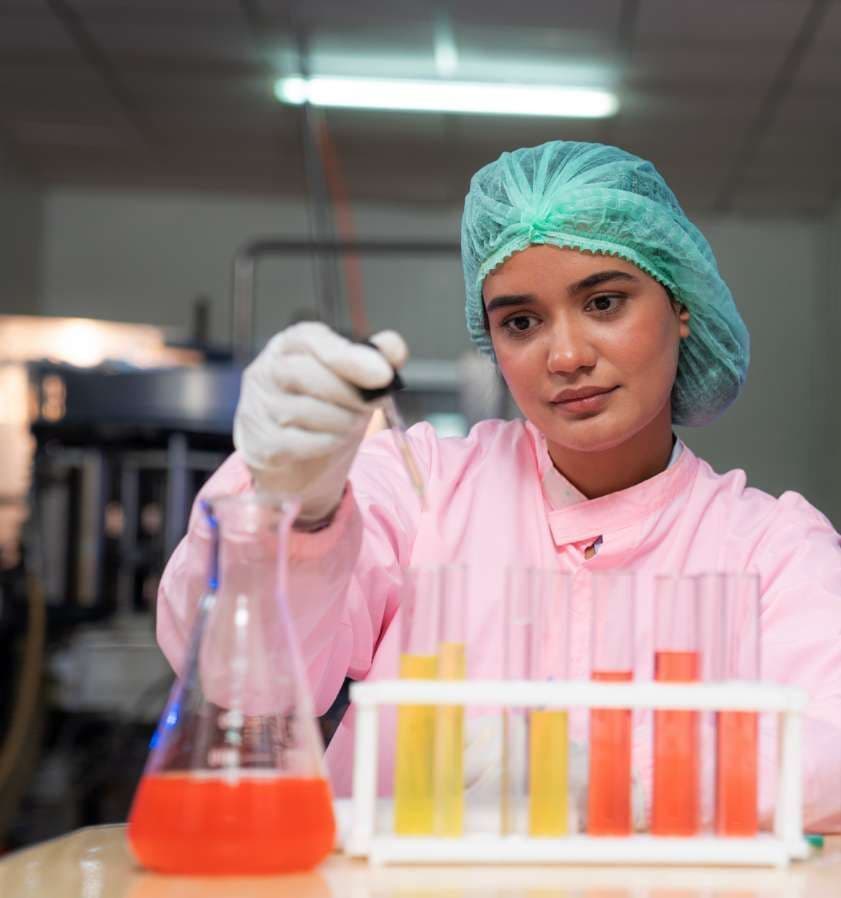
At the Department of Biotechnology, Thapar Institute of Engineering & Technology, we foster a collaborative and interdisciplinary research environment that integrates biology, engineering, and computational sciences to address critical challenges in health, agriculture, environment, and industry. Our faculty actively collaborate across departments, national and international institutions, and industry partners, enabling students to engage in multidisciplinary research with real-world impact. Our research ecosystem is supported by well-equipped laboratories and advanced facilities that encourage both independent inquiry and collaborative innovation. These include modern experimental setups, analytical instrumentation, and computational tools that enable cutting-edge research across diverse domains of biotechnology. The department's research spans a wide range of areas - Industrial and Environmental Biotechnology, Plant Molecular Biology and Genetic Engineering, Applied Microbiology, Animal-Microbe Interaction, Natural Product-Based Drug Discovery, Immunology and Cancer Biology, Computational Biology and Genomics, Food Engineering and Fruit & Vegetable Processing, Nanobiotechnology, Bioprocess Engineering, Biomaterials, and Pharmaceutical Sciences. As a doctoral researcher here, you join a community working across these areas to advance knowledge, address real-world problems, and build sustainable biotechnological solutions through research and innovation.
Collaborative Research and Lab 
Environment
Main Image
Our Laboratories
  • Microbiology Lab
    Media preparation and sterilisation, autoclaves, laminar flow units, BOD and shaking incubators, colony counting and isolation facilities, and bright field and phase contrast microscopy.
  • Biochemistry Lab.
    UV-visible and fluorescence spectrophotometry, microplate readers, refrigerated centrifuges, SDS-PAGE and protein electrophoresis, pH meters and water baths.
  • Molecular Biology Lab.
    Thermal cyclers and real-time PCR, horizontal electrophoresis, gel documentation, nucleic acid quantification, and storage at minus 20 and minus 80 degrees.
  • Bioprocess Lab.
    Benchtop and pilot-scale fermenters, bioreactors and downstream processing units, supporting work from strain to scale-up.
  • Food Lab.
    Texture analysis, ultrasound-assisted and enzyme-assisted extraction, and food quality and shelf-life testing.
  • Plant Tissue Culture Lab.
    Controlled-environment growth rooms and culture racks with regulated photoperiod and temperature, supporting micropropagation, regeneration and genetic transformation.
  • Animal Tissue Culture Lab.
    Biosafety cabinets, CO2 incubators, inverted microscopy and cryostorage for mammalian cell work.
  • Instrument Room.
    High-performance liquid chromatography, flow cytometry, FTIR, lyophilisation, rotary evaporation and fluorescence microscopy. HPLC and flow cytometry.
  • Seven dedicated research laboratories.
    Faculty-led laboratories where doctoral and project students work, each equipped for the group’s own line of research.
Main Image

Thapar Institute of Engineering & Technology combines experience with new-age implementation.

Contact Us

P.O. Box 32, Bhadson Road, Patiala, Punjab, Pin -147004, India

Admissions helpline for all programs

Toll-free Number : 18002024100
Timings: 9 AM to 6 PM, Monday to Saturday
admission@thapar.edu